How to Choose the Right Type of Nappy for Your Baby
At this point, we’ve probably changed roughly 15,000 nappies between our three kids.
Some brands failed spectacularly at 2am.
Others became non-negotiables in our diaper bag.
There are so many options, and figuring out what actually works for your baby through expensive trial and error is exhausting.
This guide breaks down the nappy types you’ll actually encounter, the important features, and how to match nappies to your baby’s specific needs.
There are mainly two types of nappies
1. Standard Disposable Nappies (with side tabs)
These are your everyday workhorses.
Modern disposables come with adhesive side tabs that let you adjust the fit and check inside without completely removing the nappy.
The key is finding one that’s soft enough for your baby’s skin.
We prioritize the softest possible option because comfort matters, especially when your baby is wearing them 24/7.
Look for nappies with a cloth-like outer layer rather than a plastic-feeling exterior.
- Pros: Convenient, consistent performance, widely available, work well for overnight and travel
- Cons: Ongoing cost adds up, landfill impact, some contain fragrances that can irritate sensitive skin
- Best for: Most families, especially those with childcare arrangements, busy schedules, or frequent travel
2. Pull-Up Style Nappies
These become game-changers in the evening and when you’re out and about.
Pull-ups are significantly easier and quicker to put on, which makes a massive difference when you have a wiggly baby (especially as they get a little older and refuse to lie still).
Around 6-12 months, changing time can turn into a wrestling match.
Pull-ups let you change your baby while they’re standing, which can save your sanity during those squirmy phases.
- Pros: Much faster application, works with standing babies, reduces changing struggles
- Cons: Slightly more expensive, can be harder to check if wet without pulling down, less adjustable fit
- Best for: Older babies, active toddlers, quick changes in public, transitioning to potty training
The side tab design to look out for
Not all adhesive tabs are created equal.
The best ones have a few key features:
- they’re wide enough to grip easily (crucial at 3am)
- they re-stick reliably if you need to adjust
- and they don’t lose adhesion throughout the day.
What to look for: Wide, stretchy tabs that fasten securely anywhere on the front panel (not just designated “landing zones”).
Bonus points if they have a refastenable design that doesn’t shred the nappy material when you adjust them.
What About Cloth Nappies?
Modern cloth nappies aren’t your grandmother’s pins and plastic pants.
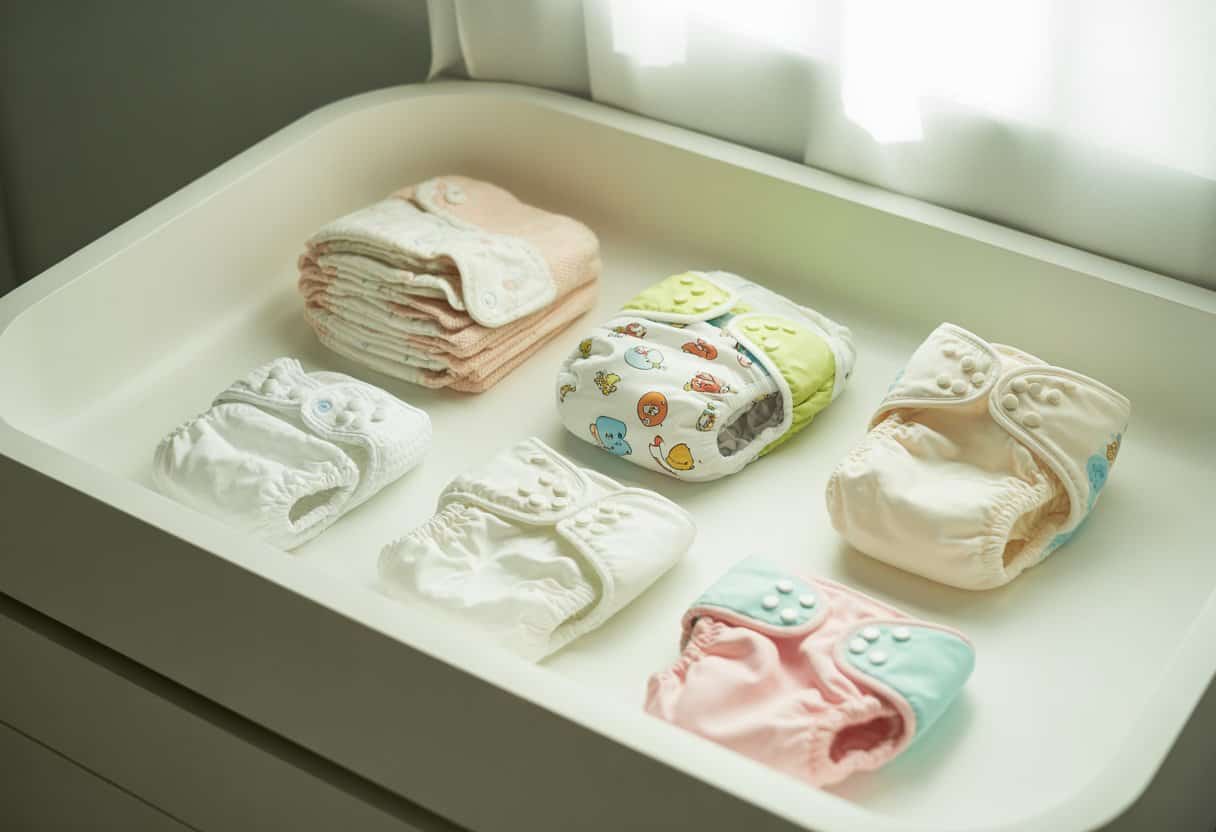
Today’s versions come as pocket diapers, all-in-ones, and hybrid systems with cute prints and much better designs.
They offer genuine long-term cost savings and environmental benefits.
- Pros: Significant savings after initial investment, eco-friendly, reusable across multiple children
- Cons: Laundry commitment (every 2-3 days), learning curve, bulkier fit under clothes, many childcare providers won’t use them
- Best for: Home-based families, eco-conscious parents willing to commit to the washing routine
Kinder Cloth Diapers are worth checking out if you’re looking into converting to cloth or simply adding a few cloth nappies into your routine.
They offer one-size pocket diapers for babies from 7-60 pounds with adjustable snaps, an athletic wicking jersey lining, and various prints!
On biodegradable and eco-friendly disposable nappies..
These use plant-based materials and make compostable claims.
They’re a middle ground for eco-conscious families who want disposable convenience with less guilt. Most are fragrance-free and use fewer chemicals, which can be better for sensitive skin.
In our opinion, performance is hit-or-miss for these ones because some just work as well as conventional disposables.
“Biodegradable” claims also need context. Most still require commercial composting facilities and won’t break down in a landfill.
If you go this route, be prepared to try a few brands before finding one that actually holds up to real-world use.
What to look for in nappies
Absorbency core design
Quality nappies have multiple absorbent layers with strategic placement.
Some brands even design slightly different cores for boys (absorbency toward the front) versus girls (more centered).
Better absorbency means fewer changes, longer stretches overnight, and less chance of leaks during car rides or long outings.
Fit and elastic quality
This is your primary defense against blowouts.
Leg gathers, waist stretch, and overall snugness determine whether everything stays contained or ends up on the car seat.
Quick fit test: you should be able to fit two fingers comfortably in the waistband. More than that? Size down. Can barely fit one finger? Size up.
Breathability
Nappies with better airflow use cloth-like outer materials instead of plastic-heavy construction.
This is crucial for rash prevention, especially in warm weather.
Sizing consistency
Nappy sizes aren’t standardized across brands.
One brand’s size 3 might fit like another’s size 2, which is especially frustrating when you buy in bulk.
Practical tip: When your baby is between sizes during growth spurts, size up for overnight (when absorbency matters most) but stay with the current size for daytime (when fit and mobility matter more).
Wetness indicator (mainly for newborns)
That line that changes color when wet is genuinely useful for the first 2-3 months.
After that, you’ll just know when your baby needs changing. Don’t pay significantly more for this feature if you’re past the newborn stage.
Chemical content (for sensitive skin)
If your baby has sensitive skin, look for fragrance-free, chlorine-free, and lotion-free options.
There’s no perfect nappy (and that’s okay!)
Leaks will happen from time to time, and that’s completely normal.
Sometimes paying more for reliability is absolutely worth it.
If a slightly more expensive brand means fewer overnight leaks and better sleep for everyone, that’s money well spent.
But don’t assume expensive automatically means better
You’ll figure it out. By kid two or three, you won’t overthink this.
The learning curve with your first baby feels steep, but you’re building expertise with every change.
Trust yourself to recognize what’s working and what isn’t. If a brand consistently leaks or causes rashes, switch without guilt. There’s no prize for brand loyalty when it comes to nappie… performance is what matters.
