Screen-Free Toys for Toddlers: 5+ Ideas
POV: You’re 20 minutes into feeding your newborn.
Your toddler has asked for a snack, brought you 14 books, and is now trying to climb the baby gate. Again.
I know that it can be SO tempting and easy to hand over the iPad just to get through a feeding session.
We’ve all been there.
But after surviving endless “entertaining a toddler with a newborn” phases with our three kids, we can proudly say that we found really great screen-free alternatives that work during those endless newborn moments. You can read more about it in our roundup of how to limit screen time with toddlers, too!
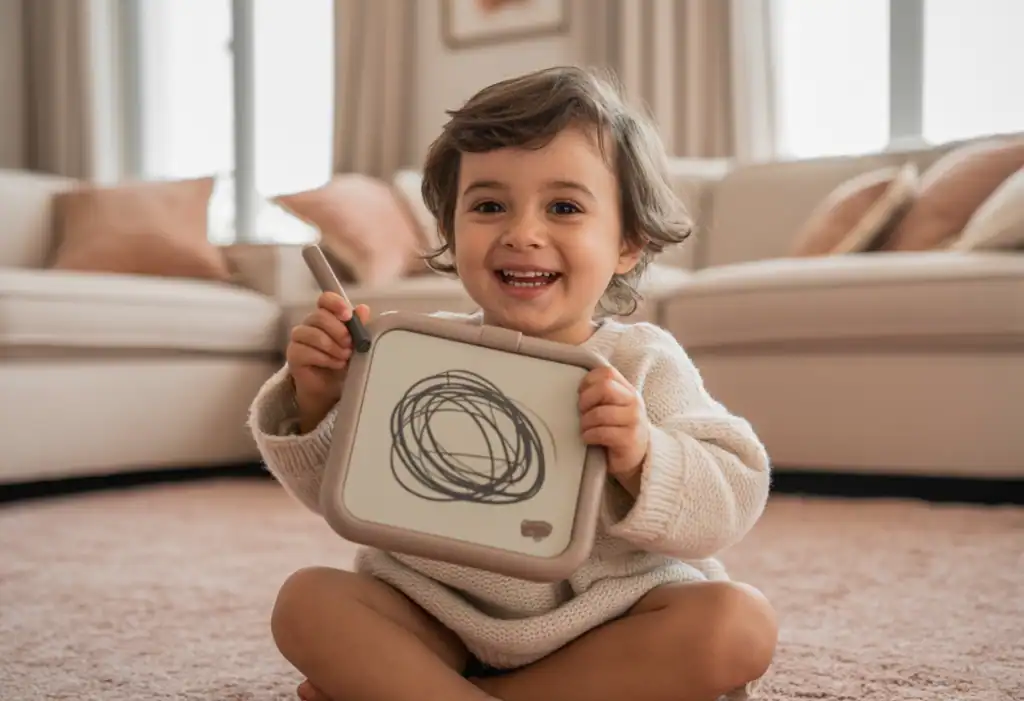
1. Magnetic Drawing Boards | Mess-Free
Best for: Outings, plane rides, any time you need guaranteed zero cleanup
What they are: Reusable drawing surfaces that erase with a swipe
Why they work: Creative outlet without any supplies to manage or messes to clean
Recommendations:
- Melissa & Doug magnetic drawing board (classic for a reason)
- Magna Doodle (the original, still works great)
- Travel-sized versions for diaper bags
Age range: 18 months – 4 years
Drawback: The stylus will get lost.
Pro tip: Buy extras or tie it to the board with string.
2. Busy Boards | For Little Hands That Need to Touch EVERYTHING
Best For: Fine motor skill development, kids who need to manipulate things
What they are: Boards with latches, switches, zippers, and other tactile elements
Why they work: Satisfies that toddler need to touch, open, and “figure things out”
Recommendations:
- Melissa & Doug latches board (durable, well-made)
- Make DIY versions with household items (locks, switches, fabric scraps)
- Montessori-style boards with real-world elements
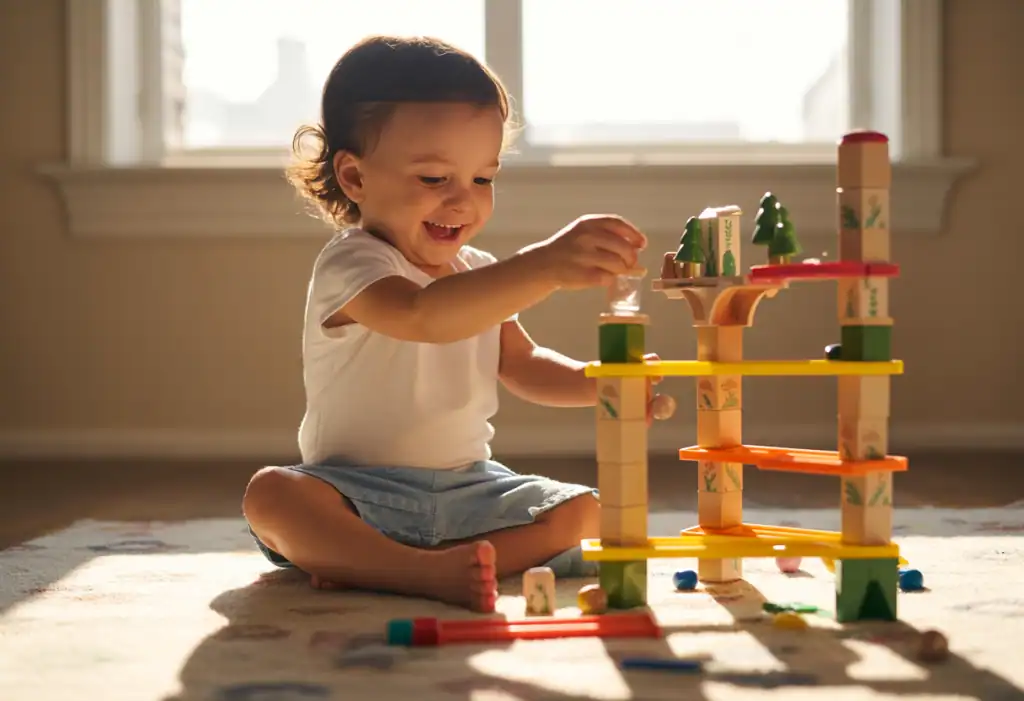
- Marble run (my son has been playing for it for months and still not bored of it!)
Age range: 18 months – 3 years
Drawback: These lose appeal after 20-30 minutes, so rotate or combine with other activities.
Pro tip: Quality matters here. Cheap busy boards break fast and become frustrating rather than engaging.
3. Sensory Bins | Contained “Mess”
Best For: Kids who need to touch and explore, naturally calming activity
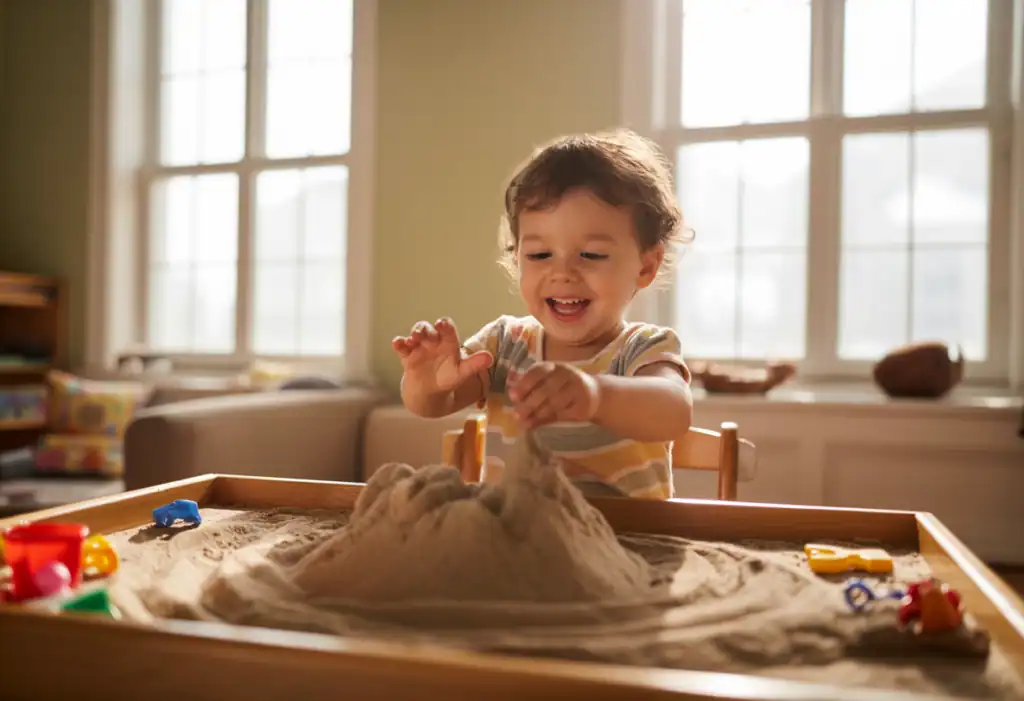
What they are: Low-mess sensory play contained in a single tray or bin
Why they work: Engages multiple senses, naturally soothing, easy to supervise from the couch
Recommendations:
- Kinetic sand with cookie cutters in a contained tray
- Dried pasta + measuring cups + muffin tin (surprisingly engaging for 30+ minutes)
- Rice sensory bin with scoops and containers
- Water Wow books (mess-free “painting” that dries and resets)
Age range: 18 months – 4 years
Pro tip: Set this up on a towel or sheet. Mess still happens, but it’s manageable and worth the engagement time.
4. Special “Feeding Time Only” Toys

Best For: Creating positive associations with nursing/feeding time
What these are: Certain toys that ONLY come out during feeding sessions
Why this works: Creates anticipation instead of resentment, maintains novelty, gives toddler something to look forward to
Our specific rotation:
- Surprise bags (small toys wrapped in tissue paper—5 minutes of unwrapping excitement)
- Special sticker books (reusable window clings worked best)
- “Treasure basket” with safe household items rotated weekly (whisk, wooden spoon, small boxes)
- New Play-Doh colors with cookie cutters
Pro tip: We had a specific bin our toddler could only access during baby feeds. Instead of “Mom’s busy again,” it became “Special toy time!”
5. Audio Players | Screen-free but still engaging
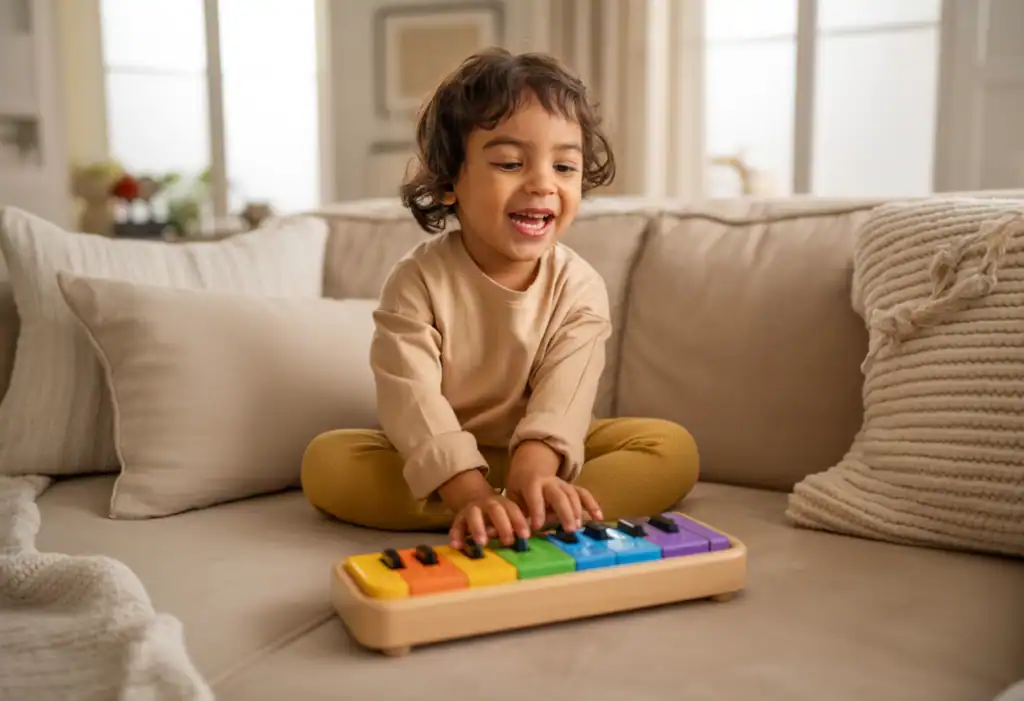
Best For: When you need longer periods of engagement and can handle some noise
Why this works: Engaging but passive enough that you can zone out
Specific products:
- Yoto Player (pricey but worth it—screen-free audio with physical cards)
- Toniebox (character figurines tell stories)
- Simple audiobooks on a dedicated kids’ speaker
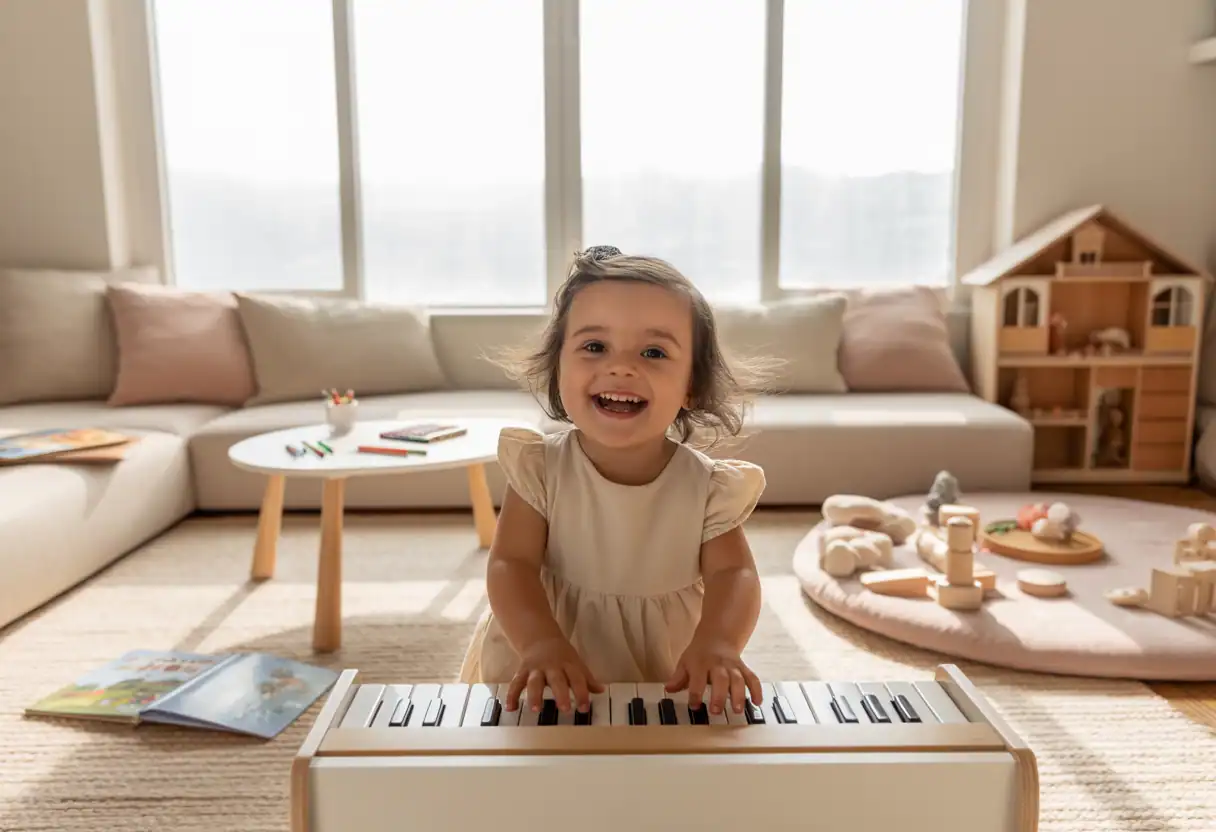
- Musical instruments (small keyboard, xylophone—yes, it’s loud, but it works)
Age range: 2 years+
These saved us during cluster feeding sessions when nothing else worked.
Pro tip…. or advice: You’ll hear the same songs 47 times. Accept this reality now.
6. Independent “Reading” Time
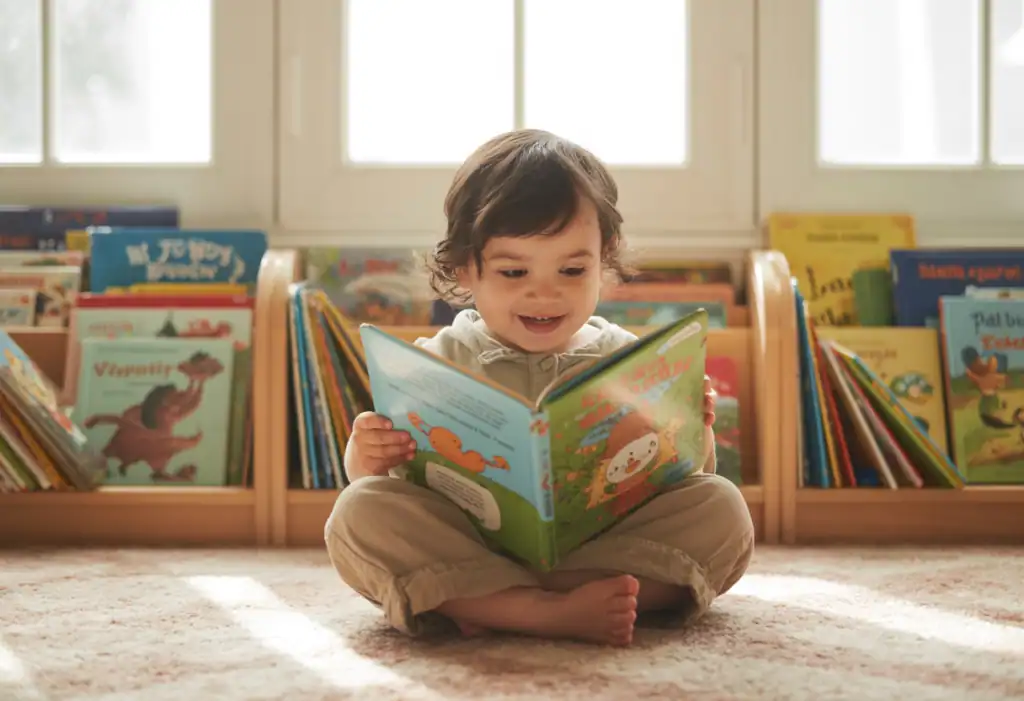
Best For: Quiet activity that promotes literacy
Recommendations:
- Board books in a dedicated basket within toddler reach
- Lift-the-flap books (more interactive = longer engagement)
- “Baby’s special reading time” routine (toddler “reads” to baby)
- Library hauls every two weeks for free novelty
Age range: 12 months+
Our oldest would sit next to me with a stack of books during every evening nursing session. Sometimes he’d “read” to his baby sister, which was adorable and gave me a few minutes of peace.
FREE Activities Beyond Toys
The Snack Tray Strategy
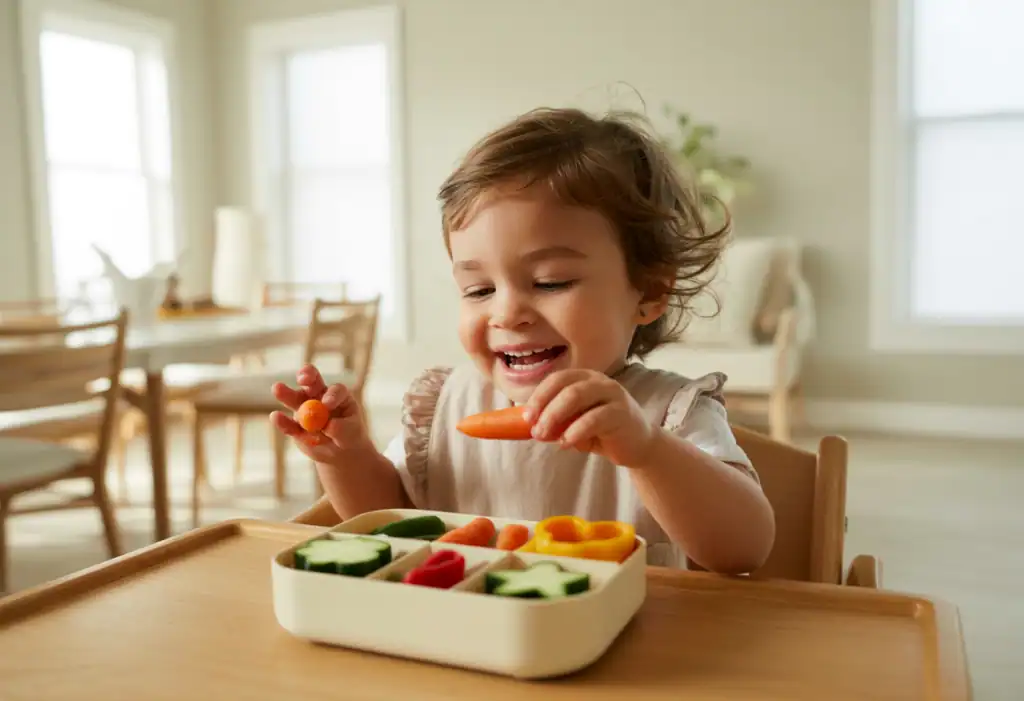
- Bento boxes with multiple compartments extend eating time
- “Breakfast picnic” on a towel beside you
- Safe finger foods that take time to eat (frozen peas, Cheerios, cut grapes)
Eating is naturally engaging for toddlers, and you can prep this while baby sleeps. Yes, you might find a Cheerio or two in couch cushions for weeks. It’s worth it.
Special Helper Jobs
Toddlers crave purpose and inclusion
- “Baby watcher” (report if baby moves or makes sounds)
- Diaper delivery person (go get a diaper from changing table)
- Burp cloth holder (hold the cloth, hand it over when needed)
- Song singer (sing to baby while you feed)
They feel important instead of replaced. This also reduces jealousy behaviors significantly. Instead of competing with baby, they were helping with baby.
Rotating Activity Stations
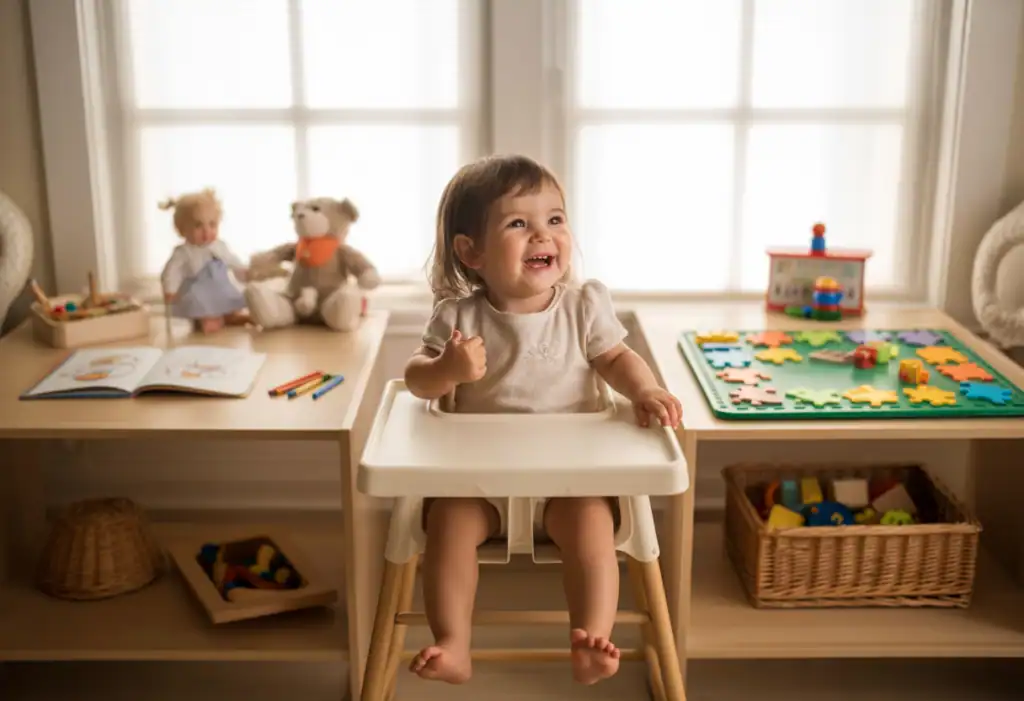
Create 3-4 small activity areas around your feeding spot
Example setup from our house:
- Station 1: Coloring books + crayons on coffee table
- Station 2: Stuffed animals + “doctor kit” on floor
- Station 3: Puzzle mat in corner
- Station 4: Building blocks in bin
Setup time: 5 minutes before a feeding session
Result: 45+ minutes of mostly independent play while toddler rotates between stations
When in doubt… just start small!
- Pick 2-3 activities from this list
- Try them during one feeding session tomorrow
- If they work, build from there
- If they don’t, screens exist and you’re still a good parent
You’ve got this. And on the days you don’t, that’s okay too.
FAQs
What age are screen-free toys most effective?
18 months to 4 years is the sweet spot, though some activities work earlier. The key is matching the activity to your child’s developmental stage and attention span.
How do I transition my toddler from screens to independent play?
Start gradually. Introduce one screen-free activity during a typically calm time, not during a meltdown. Expect resistance initially—it takes time to build these new habits.
What if my toddler refuses to play independently?
Some kids need more scaffolding than others. Start with 5-10 minute expectations and build up. Sit nearby initially, then gradually increase distance as they get comfortable.
Are expensive screen-free toys worth it?
Quality matters for toys you’ll use daily, but many effective activities cost under $20. Start with budget options and invest in higher-quality versions of things that work.
How many toys should I rotate?
Keep 3-4 activities available, with 3-4 more in storage. Rotate weekly or when interest wanes. The goal is maintained novelty without overwhelming choices.
What’s the best screen-free toy for a 2-year-old?
Magnetic drawing boards consistently win for this age—mess-free, portable, and engaging. Pair with a simple busy board for variety.
How long should independent play last for toddlers?
Realistic expectations: 15-30 minutes for 18-24 months, 30-45 minutes for 2-3 years. Some days will be shorter, some longer. Consistency matters more than duration.
