Baby With Fever: What Every Parent Needs to Know
It always happens at the worst possible time. You reach over to comfort a fussy baby at 2am, and your hand meets a little forehead that feels like it’s radiating heat.
Is this serious?
Should you go to the ER?
Do you even have a working thermometer?
The truth is that most fevers in babies are the body doing exactly what it should: fighting off an infection.
As parents of three, we’ve been through enough middle-of-the-night fever checks. Today, we’ll you through three things: what a baby with fever actually means, when to call the doctor, and what you can do at home to keep your little one comfortable.
Some key takeaways here:
A fever is 100.4°F (38°C) or higher, measured rectally for the most accurate reading in young babies
Babies under 3 months old with any fever need an immediate call to the doctor. No exceptions.
Fevers between 100°F and 102°F are low-grade and might not need medication (but it’s still best to check with your doctor)
Keep your baby hydrated and dressed in light layers, never use rubbing alcohol or ice packs
Trust your instincts. if something feels off, always call your pediatrician
Now, what counts as a fever in babies?
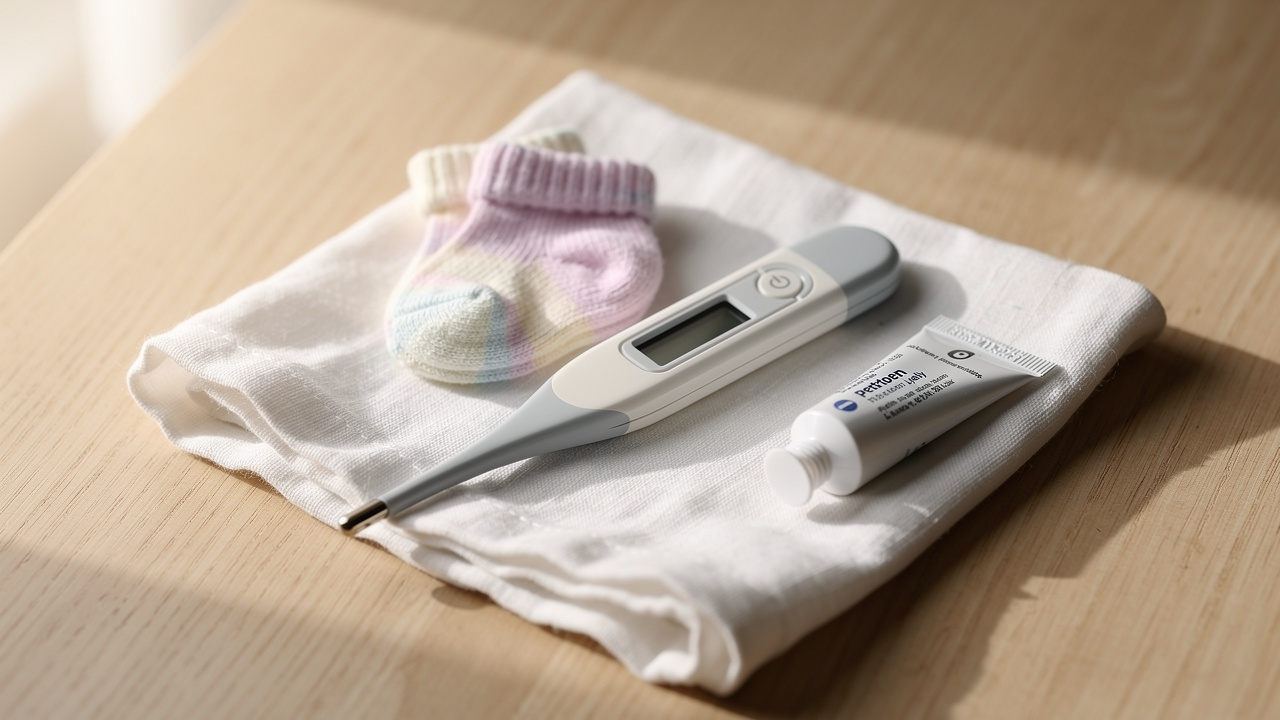
A fever is officially defined as a body temperature of 100.4°F (38°C) or higher.
That’s the threshold most pediatricians use.
BUT, the number that counts as a fever depends on how you take the temperature. A reading under the arm and a rectal reading can look noticeably different, and near that 100.4°F cutoff, accuracy really matters.
Here’s a quick breakdown by measurement method:
| Method | Fever Threshold | Notes |
|---|---|---|
| Rectal | 100.4°F (38°C)+ | Gold standard for babies under 3 years |
| Ear or Forehead | 100.4°F (38°C)+ | Acceptable for babies 6 months and older |
| Underarm (axillary) | 99°F (37.2°C)+ | Least accurate; use as a first-pass check only |
One thing worth flagging: forehead strip thermometers are not reliable.
A proper digital thermometer is worth the investment.
It’s also good to know that a baby’s normal temperature can range from as low as 96.8°F in the morning to 100.3°F by late afternoon.
So the number on the thermometer is only one piece of the picture. Always pair it with how your baby is actually acting and looking.
House of Littles has a full guide on thermometer types to help you find the right one for your baby’s age and needs.
When to call the doctor or head to the ER
This is the part that matters most. Knowing when to act (and how urgently) takes a lot of the guesswork out of a frightening moment.
“A fever itself is not an illness.. it’s a sign that the body is responding to one. The age of the child and how they look and act matters far more than the number on the thermometer.” — American Academy of Pediatrics
The single most important rule: If your baby is under 3 months old and has any fever of 100.4°F or higher, call the doctor immediately. Do not give fever medicine first. Do not wait to see if it goes down. Call right now — this cannot be overstated.
Beyond that, here’s a clear breakdown of when to escalate:
Call 911 or go to the ER immediately if your baby:
Cannot wake up or is not moving
Has blue, purple, or gray lips, tongue, or nails
Has purple or blood-colored spots on the skin
Is having a seizure
Has severe difficulty breathing
Has a bulging soft spot on top of the head
Call your doctor right away if your baby:
Is 3–6 months old with a temperature above 100.4°F
Is 6–24 months old with a fever above 100.4°F that lasts more than one day
Has a fever above 104°F (40°C)
Has a fever lasting more than 3 days
Seems dehydrated — no wet diapers, dry mouth, or no tears when crying
Has a rash along with the fever
Is crying inconsolably, seems limp, or refuses to move
Likely safe to monitor at home (babies 3 months and older) if your baby:
Perks up once the fever comes down
Is alert, responsive, and making eye contact
Is drinking normally and producing wet diapers
When in doubt, call anyway. There’s no such thing as a silly question when it comes to your baby.
How to Care for a Baby With a Fever at Home
For babies older than 3 months with a mild to moderate fever and no alarming symptoms, home care is usually safe and effective. Here’s what actually helps — and what to avoid.
Keep your baby comfortable
Dress them in one light layer of breathable clothing.
Bundling them up traps heat and makes the fever worse.
Keep the room at a comfortable temperature. Not too hot, not too cold. Let your baby rest, but they don’t need to lie completely still all day.
Hydration is your top priority
Fever causes faster fluid loss, so offering fluids consistently is one of the most important things you can do. For babies under 6 months, stick to breast milk or formula.
For older babies, oral rehydration solutions like Pedialyte, water, and even ice pops all work well.
A reduced appetite is normal, as long as your baby is drinking and producing wet diapers, you’re in good shape.
Medication guidance:
| Medication | Age Requirement | Notes |
|---|---|---|
| Acetaminophen (Tylenol) | 3 months and older | Follow package dosing carefully |
| Ibuprofen (Advil, Motrin) | 6 months and older | Do not use under 6 months |
| Aspirin | Never | Linked to Reye syndrome in children |
Fever medications typically lower temperature by 2°–3°F and take 1–2 hours to work.
They won’t always bring the reading fully back to normal. Two things to avoid entirely: rubbing alcohol on the skin (it can be absorbed and cause poisoning) and cold baths or ice packs (they trigger shivering, which actually raises body temperature).
Conclusion
Most fevers in babies are manageable, and the majority resolve on their own within 2–3 days. Now you know what a fever actually means, when it’s time to call the doctor, and how to keep your baby comfortable at home. You know your child better than any website does, trust that.
When in doubt, always call your pediatrician. There’s no such thing as an overreacting parent at 3am. For more confidence-building tools, explore House of Littles‘s thermometer guides and health and safety resources.
FAQs
Can teething cause fever in babies?
This is one of the most common baby myths out there, and it’s not quite accurate. Teething may cause a very slight temperature elevation, but it does not cause a true fever above 100°F (37.8°C). If your baby’s temperature crosses that threshold, look for another cause and check in with your pediatrician.
What should I do if my baby has fever but no other symptoms?
It’s actually very common for fever to appear before other symptoms, sometimes up to 24 hours before a runny nose or cough shows up. For babies over 3 months who are alert and drinking well, monitor closely and apply the home care steps above. For babies under 3 months, call your doctor regardless of how your baby seems.
How do I take baby’s temperature accurately?
A rectal thermometer is the gold standard for babies under 3 years old. Ear and forehead thermometers are acceptable for babies 6 months and older, though technique matters for accuracy. Avoid forehead strip thermometers. They are simply not reliable enough.
Should I wake my baby for medication?
If your baby is sleeping comfortably, there’s generally no need to wake them just to give medication. However, if they seem distressed or have a high fever, follow the dosing guidance on the package and consult your pediatrician if you’re unsure about the right dose for your baby’s weight.
