
Baby Rashes Decoded: Diaper Rash, Eczema & What You Can Treat at Home
It’s 3 AM.
Your baby’s chest is suddenly covered in tiny red bumps.
Cue the panic Googling.
We’ve been there… three kids, countless rashes, and more middle-of-the-night searches than we’d like to admit.
The truth is, baby rashes are incredibly common, and most look confusingly similar when you’re sleep-deprived and worried.
Here are some of the common rashes you’ll actually encounter in the first year: what they look like, why they happen, and simple steps to take.
We’re parents who’ve navigated this, not doctors—so while we’ll give you practical guidance, always trust your instincts and call your pediatrician when something feels off.
Why Do Babies Get Rashes?
Baby skin is thinner and more sensitive than ours.
It’s still developing its protective barrier, which means it reacts to things that wouldn’t bother adult skin… moisture, friction, heat, new foods, even their own drool.
Rashes are extremely common in the first year.
Most resolve with simple home care and a bit of patience. The real skill isn’t preventing every rash (you won’t), it’s knowing which ones are routine and which need medical attention.
Below we tackle the big four rashes parents meet early on: diaper rash, heat rash, eczema, and allergic reactions. These cover most of what you’ll see, and once you know what you’re looking at, the 3 AM panic gets a lot easier to manage.
1. Diaper Rash
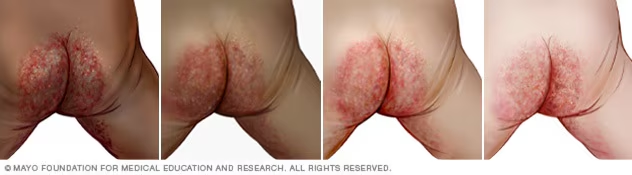
Photo credit: Mayo Clinic
What diaper rash looks like
Redness, bumps, and shiny or irritated skin in the diaper area.
Sometimes it’s just pink; other times it’s angry red with raised spots.
The skin might look raw or feel warm to the touch.
What causes diaper rash
Moisture, friction, and the acidity of poop and pee—basically, everything happening inside a diaper. Common triggers include teething (which changes stool consistency), new foods, antibiotics, and long stretches between changes (hello, overnight sleep).
What to do with diaper rash
Frequent diaper changes are your first line of defense.
When you change, let your baby’s skin fully dry before putting on a new diaper—pat gently or let them air out for a few minutes.
Use a thick zinc oxide barrier cream at every change. Note: a visible layer, not a thin swipe. This creates a protective barrier between skin and moisture.
Diaper-free time speeds healing. Let your baby hang out on a waterproof mat or old towel for 10–15 minutes a few times a day.
Skip wipes if the rash is bad—they can sting. Use a soft cloth with warm water instead.
Most diaper rashes improve within a day or two with consistent care. The expensive “miracle” creams usually aren’t worth it—basic zinc oxide works.
When to call the doctor for diaper rash
Call if you see blisters, pus, or bright red borders with satellite spots (signs of yeast).
Also call if the rash spreads beyond the diaper area, doesn’t improve after 2–3 days of treatment, or if your baby develops a fever.
2. Heat Rash (Prickly Heat)
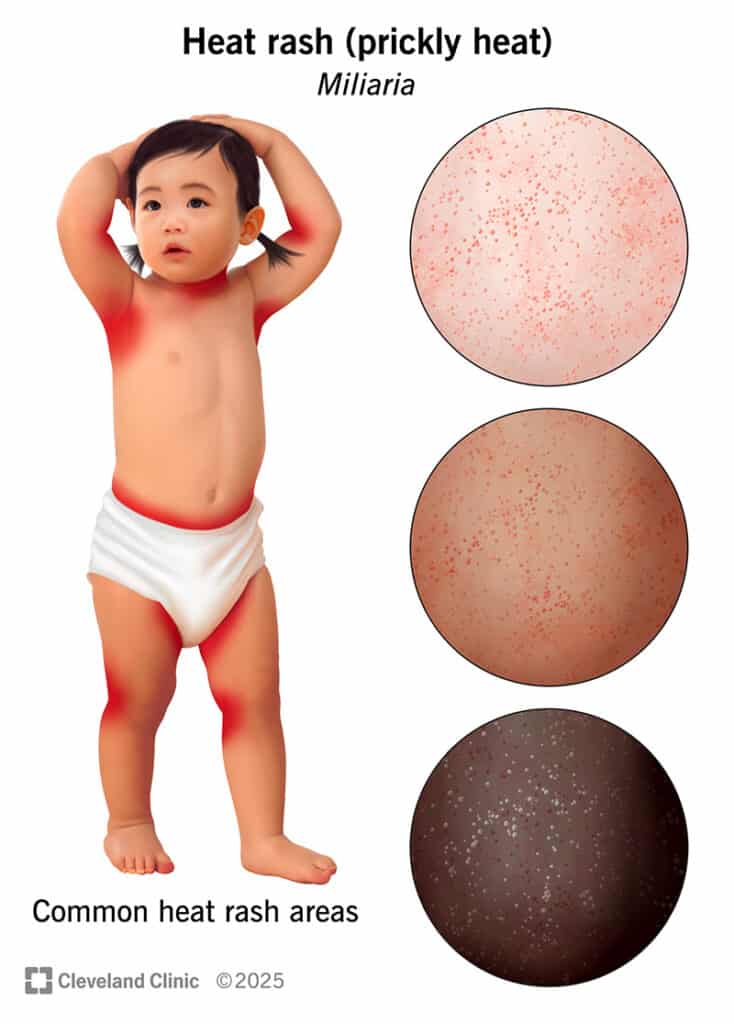
Photo credit: Cleveland Clinic
What heat rash looks like
Tiny bumps.
Sometimes clear, sometimes red—that cluster on sweaty areas like the neck, chest, back, and skin folds. They can look like little blisters or just raised dots. The rash usually appears after your baby’s been warm or overdressed.
What causes heat rash
Overheating and blocked pores. Babies don’t regulate temperature as well as we do, and their sweat glands are still developing.
Common culprits: too many layers, humid weather, being bundled in a car seat or carrier for too long.
If you’re traveling somewhere warm or dealing with summer heat, heat rash is almost guaranteed at some point.
What to do with heat rash
Cool down the environment. Move to air conditioning, a fan, or a shaded area. Remove extra layers.
Dress your baby in light, breathable clothing. One layer is usually enough. If you yourself are sweating, they’re probably too warm.
Avoid heavy lotions or oils on the rash. They can trap heat and make it worse. Keep the skin dry and exposed to air when possible.
Heat rash usually clears up on its own once your baby cools down. No special creams needed.
When to call the doctor for heat rash
Call if the bumps fill with pus, the rash worsens instead of improving, your baby develops a fever, or they seem increasingly uncomfortable or irritable.
3. Eczema
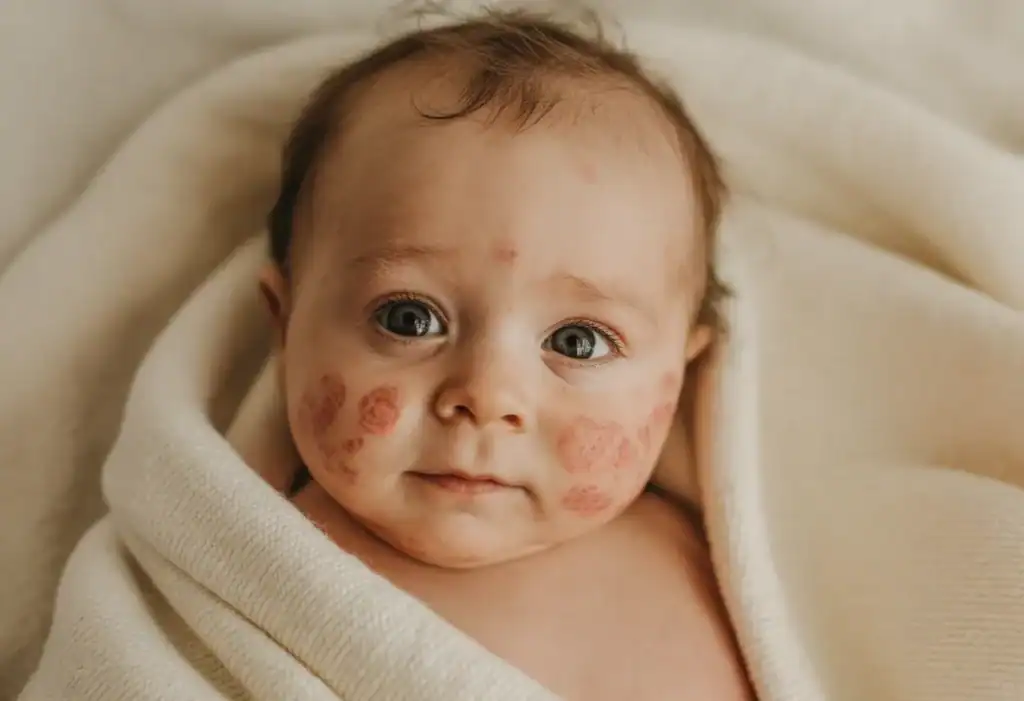
What eczema looks like
Dry, rough patches of skin that can be red, scaly, or even weepy in severe cases.
Eczema tends to show up on cheeks, arms, and legs, and it often comes and goes in cycles—flaring up, calming down, then flaring again.
What causes eczema
Sensitive skin combined with triggers like dry air, fragrances, harsh detergents, allergens, or even stress. It’s not caused by poor hygiene or something you did wrong. Some babies just have more reactive skin.
What to do with eczema
Moisturize heavily and often with a fragrance-free, thick cream or ointment. Apply right after baths while skin is still damp to lock in moisture. We’re talking multiple times a day during flares.
Keep baths lukewarm and short. Hot water strips natural oils and makes eczema worse. Use a gentle, fragrance-free cleanser (or just water for younger babies).
Identify and avoid triggers. Pay attention to what makes the rash worse—new laundry detergent, certain fabrics, dry indoor air. Keep simple notes if it helps.
Dress your baby in soft, breathable fabrics like cotton. Avoid scratchy materials.
To prevent scratching, keep nails trimmed short and consider soft mittens or long sleeves during bad flares. Scratching leads to infection and makes everything worse.
When to call the doctor for eczema
Call if you see signs of infection (oozing, crusting, pus), if the eczema is affecting sleep or feeding, if it’s spreading rapidly, or if home care isn’t helping after 1–2 weeks. Your pediatrician may prescribe a mild steroid cream or recommend an allergist.
4. Allergic Rashes: Hives, Contact Reactions, and What to Watch For
What allergic reactions look like
Hives are raised, red or pink welts that can appear suddenly and move around the body. They might be small or large, and they usually itch.
Contact rashes show up as redness or irritation in the exact spot where skin touched something irritating—like a new lotion, metal snap, or plant.
What causes allergic reactions
Food allergens (common culprits: eggs, milk, peanuts), environmental triggers (pollen, pet dander), detergents, metals, medications, or even insect bites.
What to do with allergic reactions
Remove the suspected trigger if you can identify it. If it’s a new food, stop offering it and make a note for your pediatrician.
Apply a cool compress to soothe itching and reduce swelling.
Don’t give antihistamines without guidance. NEVER dose babies yourself. Call your pediatrician first.
When to call the doctor or 911 for allergic reactions
Call 911 immediately if your baby has any trouble breathing, facial swelling (especially lips or tongue), or seems lethargic after a rash appears.
Call your pediatrician right away if hives spread rapidly, appear after starting a new medication, or if you suspect a food allergy. Even if the reaction seems mild, it’s worth documenting and discussing.
When a rash is more than a rash
Most rashes are harmless, but some are red flags for something more serious. Call your pediatrician or seek emergency care if you notice:
- Fever, especially in babies under 3 months
- Lethargy or poor feeding—if your baby seems unusually sleepy or won’t eat
- Purple or dark spots that don’t fade when you press on them (this can indicate a serious infection)
- Rapid spread across the body
- Painful rash that makes your baby cry when touched
- Signs of infection: pus, yellow crusting, red streaks spreading from the rash
- Swelling around the face or mouth
Trust your instincts.
If something feels wrong, use your pediatrician’s after-hours nurse line or head to urgent care. You know your baby better than anyone.
What to keep at home for rash emegencies
Having a basic rash toolkit saves you from late-night pharmacy runs and helps you act quickly when a rash appears.
Essentials
- Zinc oxide cream (thick, at least 40% zinc)
- Fragrance-free moisturizer (look for ointments or thick creams, not lotions)
- Gentle cleanser (fragrance-free, designed for babies)
- Any medicine or cream prescribed by the doctor
- Soft cloths (for gentle cleaning when wipes are too harsh)
Nice-to-have
- Cool mist humidifier (helps with dry skin and eczema flares)
You don’t need a full pharmacy, but these basics cover most situations and give you something to do while you’re deciding whether to call the doctor.
Baby rashes are common!
You’ll see several rashes in your baby’s first year. Most are familiar, treatable, and nothing to worry about. The more you know what you’re looking at, the more confidently you can act—whether that’s slathering on barrier cream, cooling things down, or picking up the phone.
Trust your instincts, use your toolkit, and remember: you’re not expected to diagnose everything on your own. When in doubt, call. That’s what pediatricians and nurse lines are for.
Save this guide, share it with a sleep-deprived friend, and take a breath. You’ve got this.
