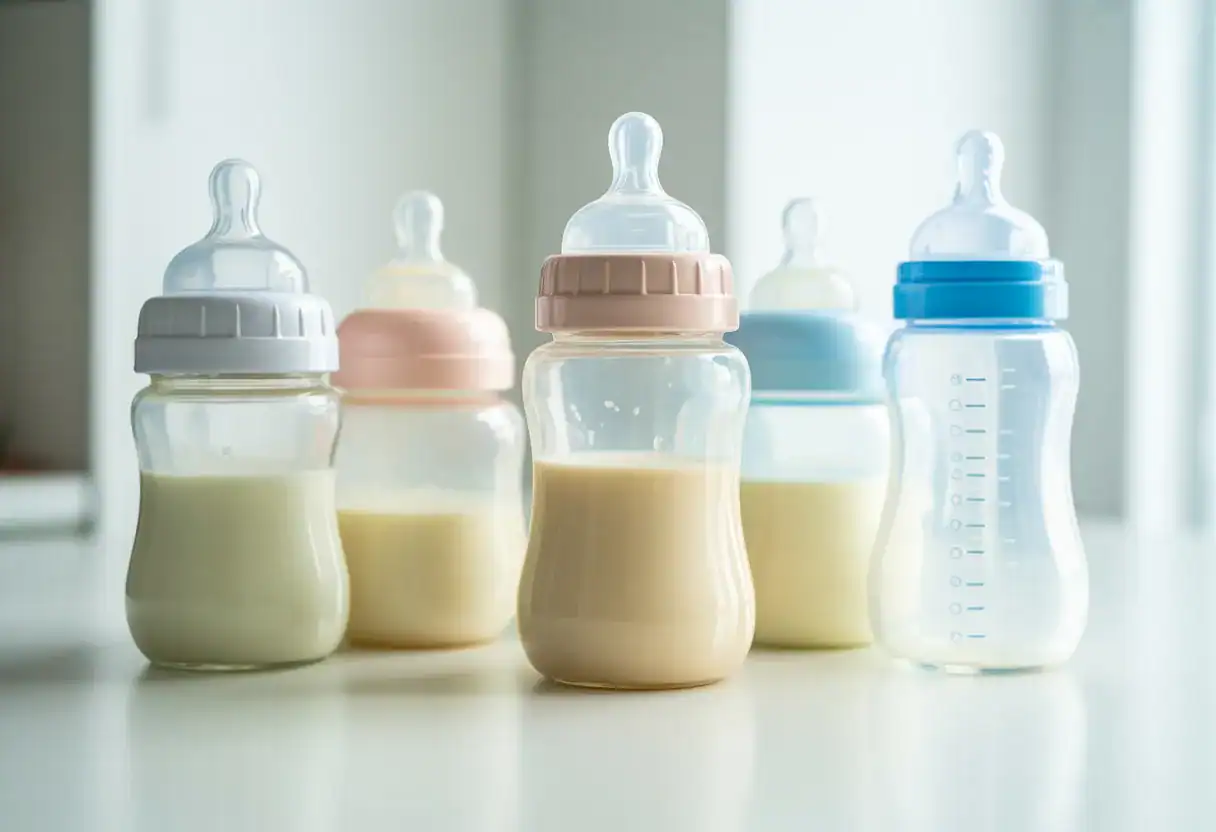
A Guide to Choosing Baby Bottles (Without Wasting $100 on Ones Your Baby Hates)
Stand in the baby bottle aisle long enough and you’ll start questioning reality.
Forty-seven options, all claiming to solve colic, protect breastfeeding, and make life easier.
Some promise doctor-designed nipples. Others swear their patented vents eliminate gas entirely. Most cost $12 per bottle.
The reality is that some babies simply reject the first bottle you try. No bottle fixes gas alone.. all comes from immature digestion, not just air intake. But the right match can cut your frustration in half.
Below, we cover all the non-negotiables (safety, nipple flow, cleaning reality), how to spot marketing fluff, and how to start without buying eight matching bottles your baby refuses to touch.
We’ve tested the fancy ones, broken the glass ones, and scrubbed the impossible-to-clean vented ones at 2 a.m. Here’s what matters.
What To Look For In Baby Bottles
Material Safety
Non-negotiable:
- BPA-free (this should be standard by now, but always check)
- Food-grade materials: glass, silicone, or polypropylene plastic
Three main baby bottle materials and what they’re good for:
- Glass baby bottles: Zero chemical worries, never absorbs smells, lasts forever. BUT it’s heavy and shatters. If you like this, silicone sleeves could be helpful for clumsy babies (and parents..)
- Plastic (polypropylene) baby bottles: Lightweight and cheap BUT scratches after a few weeks of bottle-brush scrubbing. Starts smelling like sour milk by month three no matter how much you wash it. Budget-friendly upfront, but you’ll replace them faster.
- Silicone baby bottles: Flex means drop-proof and baby can easily grip it once they’re old enough. Pricey, and the measurement markings fade after repeated washing. Great for travel or babies who throw bottles like tiny angry pitchers.

Nipple Flow (Arguably what matters most here)
Too fast = newborn gulps air, chokes, spits up everywhere, and you’re changing both your outfits.
Too slow = older baby screams in frustration, refuses the bottle entirely, and you’re stressed because they haven’t eaten in hours.
The catch: Flow sizes vary wildly by brand. There’s no industry standard. Level 1 Dr. Brown’s ≠ Level 1 Tommee Tippee. One brand’s “newborn” flow might flood your baby while another’s feels like sucking concrete.
Start here:
- Newborns (0-3 months): Slow/Level 0 or 1
- Watch for cues: Milk dribbling out of their mouth = too fast. Baby sucking hard with no milk coming out = too slow.
- Breastfed babies: Wide, slow-flow nipples help prevent shallow latch and nipple confusion (though honestly, some babies switch between breast and bottle with zero drama and others reject one immediately, it’s a crapshoot).
Common mistake: Buying one brand’s full eight-bottle gift set, then realizing their “newborn” flow is way too fast and now you’re stuck with $80 of bottles you can’t use for months.
What we’d actually do: Grab a $10 variety nipple pack first. Test flows before committing to a full set. Your baby will tell you what works—usually by screaming or peacefully drinking.

Ease of Cleaning
Day-to-day reality: You’ll wash bottles four to six times daily. Complex designs with hidden crevices turn into 2 a.m. scrubbing meltdowns when you’re exhausted and just want to sleep.
Wide-mouth bottles: Easier to hand-wash, fit bottle brushes properly, and you can actually see if there’s residue stuck inside.
Minimal parts: Fewer pieces = less milk trapped in crevices breeding bacteria. Simple bottles take 30 seconds to wash. Vented bottles take three minutes and a toothpick.
The vented bottle trap:
Anti-colic bottles (Dr. Brown’s, Tommee Tippee Advanced) have five or more parts per bottle. Formula residue clogs the tiny vents overnight. Valves require toothpicks or pipe cleaners to clean properly. Dishwasher claims often fail—valves warp, vents trap water, and suddenly you’re hand-washing anyway.
Yes, vented bottles help some gassy babies, but they add 10 minutes per wash. This might only be worth it if gas is severe and other fixes (paced feeding, burping, formula changes) haven’t worked.

Anti-Colic Features: What They Do (And Don’t)
What they actually do:
- Reduce air intake during feeding by venting air out through the bottom or a straw-like system
- Theoretically = less gas
The reality:
- No bottle prevents colic entirely. Gas comes from immature digestion, not just air swallowing.
- Vents help formula-fed babies more than breastfed (formula naturally creates more gas).
- Some babies have zero gas issues with basic bottles. Others are gassy no matter what you use.
- More parts = more cleaning = more parent frustration.
Try vents if your baby has obvious gas issues—arching back, screaming after feeds, pulling legs up in pain. Don’t preemptively buy them “just in case” because the marketing scared you. Most babies do fine with standard bottles.

How To Choose A Baby Bottle: Start Small, Adjust Fast
Buy two bottles of different types and see which one your baby tolerates. Not loves—tolerates. Babies are unpredictable. Some latch immediately. Others refuse every bottle for three weeks, then suddenly accept one for no clear reason.
Test for 3-4 feeds. Watch for:
- Choking or gasping (flow too fast)
- Excessive spit-up (could be flow, could be air intake, could be overfeeding)
- Outright refusal—turning head away, crying, refusing to latch
- Leaks from seams or nipple base
Red flags to switch immediately:
- Baby struggles to latch after 4-5 tries across multiple feeds
- Milk leaking from seams (quality control issue or damaged seal)
- Nipples clouding, tearing, or getting sticky after one week
What Doesn’t Matter As Much As You Think
- Brand name: Expensive doesn’t mean better. It really varies. The reviews definitely help more than the price tag.
- “Doctor recommended”: Usually marketing partnerships, not medical necessity. Pediatricians recommend safe bottles and correct nipple flow—they don’t care if it’s $4 or $14.
- Matching sets: You don’t need bottles, warmer, sterilizer, and drying rack from the same brand. Mix and match based on what actually works.
- Cute designs: Fun, sure. Irrelevant to function. Your baby doesn’t care if the bottle has woodland creatures on it.
The Bottomline: Start Practical, Adjust As You Go
- What matters: safe materials, correct nipple flow for your baby’s age, and ease of cleaning
- Start with 2-3 bottles and a variety nipple pack—expect to pivot
- Anti-colic vents help some babies, not all. Don’t buy them preemptively.
- Simple beats fancy when you’re washing bottles at 3 a.m. with one hand while holding a crying baby
Most parents try two to three bottle types before finding the one that works. Babies are weird and specific about preferences you can’t predict.
The “perfect” bottle is the one your baby takes without a fight and you can clean without a meltdown. It might be the $6 basic bottle from Target or the $15 vented system—but you won’t know until you try. Start small, stay flexible, and ignore the aisle paralysis. You’ll figure it out.
Frequently Asked Questions
Do anti-colic bottles actually work?
They work for some babies—usually formula-fed babies with obvious gas issues (arching back, screaming after feeds, pulling legs up). Anti-colic bottles reduce air intake during feeding, which can help with gas. But gas also comes from immature digestion, so no bottle fixes it entirely.
If your baby’s gassy, try paced feeding and frequent burping first. If that doesn’t help, test a two-pack of anti-colic bottles before committing to a full set. Don’t buy them preemptively “just in case”—most babies do fine with standard bottles, and vented systems add significant cleaning time (five or more parts per bottle, tiny valves that clog with formula residue).
What’s the safest baby bottle material?
All three main materials—glass, plastic (polypropylene), and silicone—are safe if they’re BPA-free and food-grade. The “safest” depends on your priorities:
Avoid hand-me-down bottles made before 2012 (BPA wasn’t banned until then). Don’t microwave plastic bottles—it can break down materials over time. Replace bottles if they’re cloudy, cracked, or smell weird even after washing.
How do I know if nipple flow is wrong?
Flow too fast:
- Milk dribbling out of baby’s mouth during feeds
- Choking, gasping, or coughing while drinking
- Gulping loudly (swallowing air along with milk)
- Excessive spit-up after feeds
Flow too slow:
- Baby sucking hard but little to no milk coming out
- Frustration—pulling off the bottle, crying, refusing to latch again
- Feeds taking 45+ minutes (newborns should finish 2-4 oz in 15-20 minutes)
- Collapsing nipple (nipple flattens from suction because baby’s working too hard)
What to do: If flow’s too fast, size down or try a different brand’s “slow” nipple (they vary wildly). If too slow, size up. For breastfed babies, stick with slow flow even as they age—it keeps bottle-feeding effort similar to breastfeeding and prevents nipple preference.
Test new nipples for 3-4 feeds before deciding. Babies have off days, so one bad feed doesn’t mean the flow’s wrong.
